Window Seat, Reading Chair or Floor Cushion? Three Ways to Make a Quiet Corner
Compare a window seat, reading chair, and floor cushion to find a quiet corner that fits your room, preferred posture, and everyday reading habits.
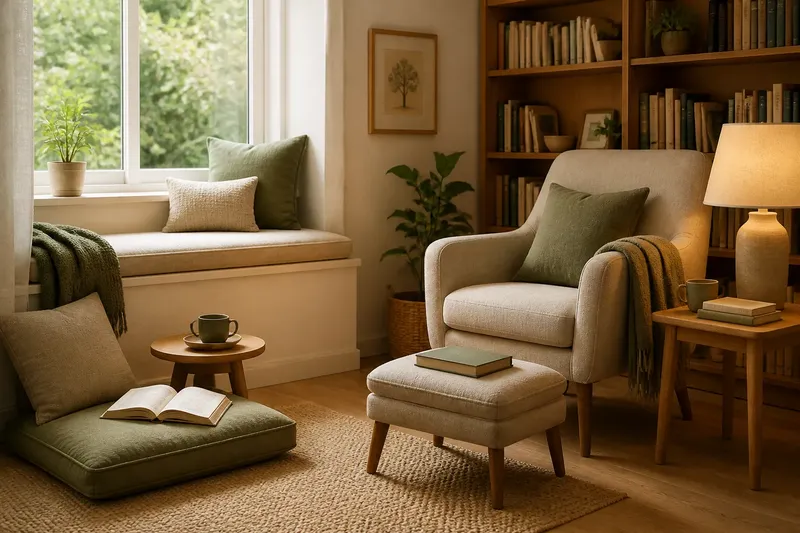
A quiet corner works best when its seat fits both your body and the space around it. For a reading spot at home, a window seat, a reading chair, and a floor cushion make three different demands: one borrows a ledge, one claims a patch of floor, and one keeps the furniture low and flexible.
Choose by looking at where you can sit without blocking a route, what position you can comfortably hold, and whether you want the corner to stay put. A good arrangement does not need to occupy an entire room. It does need a place for the book, a source of light, and enough room to get in and out without negotiating with a laundry basket.
Start with the place the room can spare
Look first for an underused edge rather than an empty central patch. A window wall, the end of a sofa, or a quiet corner beside a bookcase may already have the useful ingredients: daylight, a nearby surface, or a natural boundary that makes the seat feel separate.
Check the route through the room at the time you are likely to read. A chair that fits on paper can still narrow the path from a doorway to a closet. A floor cushion may slide under a table when not in use, while a built-in window ledge may leave the floor clear but require a cushion and a way to support your back.
Then notice what the spot asks you to do. If you need to move a lamp, shift a side table, and relocate several daily objects before sitting down, the arrangement may be too demanding for a small pleasure. Keep the setup close to its natural home, like leaving a favorite mug on the shelf where you actually reach for it.
A window seat borrows the room’s edge
A window seat is a natural choice when a deep sill, built-in bench, or sturdy window-side ledge is already available. It uses the perimeter of the room and can leave the main walking area open. A firm cushion makes a hard surface more welcoming, while a smaller cushion behind the lower back can help if the seat has no built-in support.
Its posture is upright or lightly reclined, depending on the depth of the ledge and the angle of the back support. That can suit reading with a book in hand, especially if the seat is high enough to let your feet rest comfortably. If your legs dangle or the sill is too shallow to support you, the view is not much compensation.
Daylight is useful, but the window is not automatically the best light source. The page may be shadowed by your hand, or glare may make you tilt the book. A small reading lamp placed to the side can help after daylight changes. Keep the sill itself free of objects that make the seat difficult to use; a row of plants can turn a bench into a shelf with ambitions.
This arrangement asks for little floor space, but it depends on a suitable ledge and a comfortable way to sit. It also places you near the window’s changing temperature and light. If the spot feels drafty or too bright, a chair elsewhere may be kinder to the body and the page.
A reading chair gives the back a clear job
A reading chair is the most self-contained option. It can sit beside a bookcase or lamp and does not need a window ledge, but it claims a definite area of floor. Allow room for the chair’s footprint and for the space needed to approach it, turn, and stand up.
Look for a seat that supports the position you actually prefer. A more upright back can suit readers who like to keep a book at chest height; a gently reclined chair may feel better for longer, slower reading. Seat depth matters too: a deep chair can be comfortable with a cushion behind the back, but may leave shorter-legged readers reaching for the floor. A footstool can help, though it adds another object to the arrangement.
Put the lamp where the page is lit without forcing your neck into a permanent turn. A side table can hold a book, reading glasses, or a cup, but keep it within easy reach rather than wedged behind the chair. If the chair is the only place in the room with a proper lamp, it can become a useful reading station without requiring additional decoration.
The chair is less flexible than a cushion, but it offers a clear, repeatable posture and a familiar place to return to. It is a sensible choice when the room has a spare corner and you prefer a seat with back support. It is less persuasive when every inch of floor already has a daily job.
A floor cushion keeps the arrangement light
A floor cushion asks for the least furniture and the most willingness to sit low. It can be pulled beside a low table or bookcase, then tucked away when the room needs to serve another purpose. A thick, stable cushion is more useful than a decorative pad that compresses quickly; a second cushion can support the back against a wall.
The posture is flexible, but that does not mean every position will stay comfortable. Some readers like sitting cross-legged, while others need their legs extended or a cushion beneath the knees. Try the arrangement briefly before making it the default. If getting down or standing up is awkward, a chair is the more practical answer, not a personal failure of imagination.
Place the cushion on a clean, even surface and leave enough room to shift position. A nearby low table gives the book a home and keeps it from sliding onto the floor. For light, use a lamp that reaches the page without shining directly into your eyes; the exact placement depends on the room and the direction you face.
This is the easiest option to move and the least committed in terms of furniture. It can suit a shared room or a small space where a permanent chair would obstruct other uses. Its trade-off is that the reader must provide the back support and adjust the posture as needed.
Which quiet corner suits your room?
Which option takes the least floor space?
A window seat usually uses an existing ledge, while a floor cushion can be stored away between reading sessions. A chair needs a lasting footprint and clearance around it, so it is the least compact choice when the room is already busy.
Which seat offers the most back support?
A reading chair generally provides the clearest built-in support, although its shape should suit the way you sit. A window seat can work with cushions against a wall, while a floor cushion relies on your own posture or a nearby support.
Is a window seat comfortable for long reading?
It can be, if its depth, height, and back support suit you and your feet have a comfortable place to rest. If you find yourself shifting repeatedly or bracing against the window frame, try a chair or add a stable cushion arrangement.
Can a floor cushion work in a shared room?
Yes, if it can be moved aside without becoming a daily obstacle and the floor is comfortable for sitting. A cushion that stores in a basket or under a table keeps the room adaptable, though frequent setup may make it less inviting to use.
Try the arrangement before settling it in
Say you have a bright living room with a shallow window ledge, a clear wall beside the bookcase, and little spare floor. You could place a chair beside the bookcase for a few ordinary reading sessions, using a small lamp and a cushion behind the back; the observable result should be a more supported seat without blocking the window-side route. If the chair makes the room feel crowded, a floor cushion can be tried in the same corner and put away afterward.
For a week, treat the arrangement as a small routine rather than a furniture decision that must be perfect. On the first day, identify a spot and sit there with a book long enough to notice what feels awkward. On the next reading session, adjust one thing—lamp position, cushion thickness, or the distance to a side table—so you can tell what helped.
During the rest of the week, use the corner at the time you are most likely to read, not only when the room is unusually tidy. Notice whether you leave the book nearby, whether you avoid the seat because getting into it feels cumbersome, and whether the route through the room stays clear. Those ordinary signs are more useful than a corner that looks settled in a photograph.
If the seat is comfortable but the light is poor, change the lamp before replacing the furniture. If the light works but your back or legs object, try another seating style. A quiet corner earns its place by making it easier to pause; the best one is the arrangement you can use without first rearranging the room.
For a reading spot at home, make the final choice around the constraint you notice most often: limited floor, a need for back support, or a wish to put everything away. Keep one small surface for the book and glasses, and leave the rest of the corner unclaimed. Empty space is not a furnishing problem.